
By Kaaren Joubert, Planning Manager, Cato Bolam Consultants.
For anyone reviewing urban development potential in Auckland in the near future, Watercare’s network capacity deserves renewed attention, particularly in the context of Auckland Council’s proposed Plan Change 120 (PC120), where higher permitted intensification must be matched by available water and wastewater capacity.
Why Watercare capacity matters
PC120’s proposed zoning may signal how development intensity is likely to change in future. However, for those planning ahead, water and wastewater capacity will need to be factored in, as these constraints play a decisive role in shaping what can be built, when it can be delivered, and at what scale across many parts of Auckland.
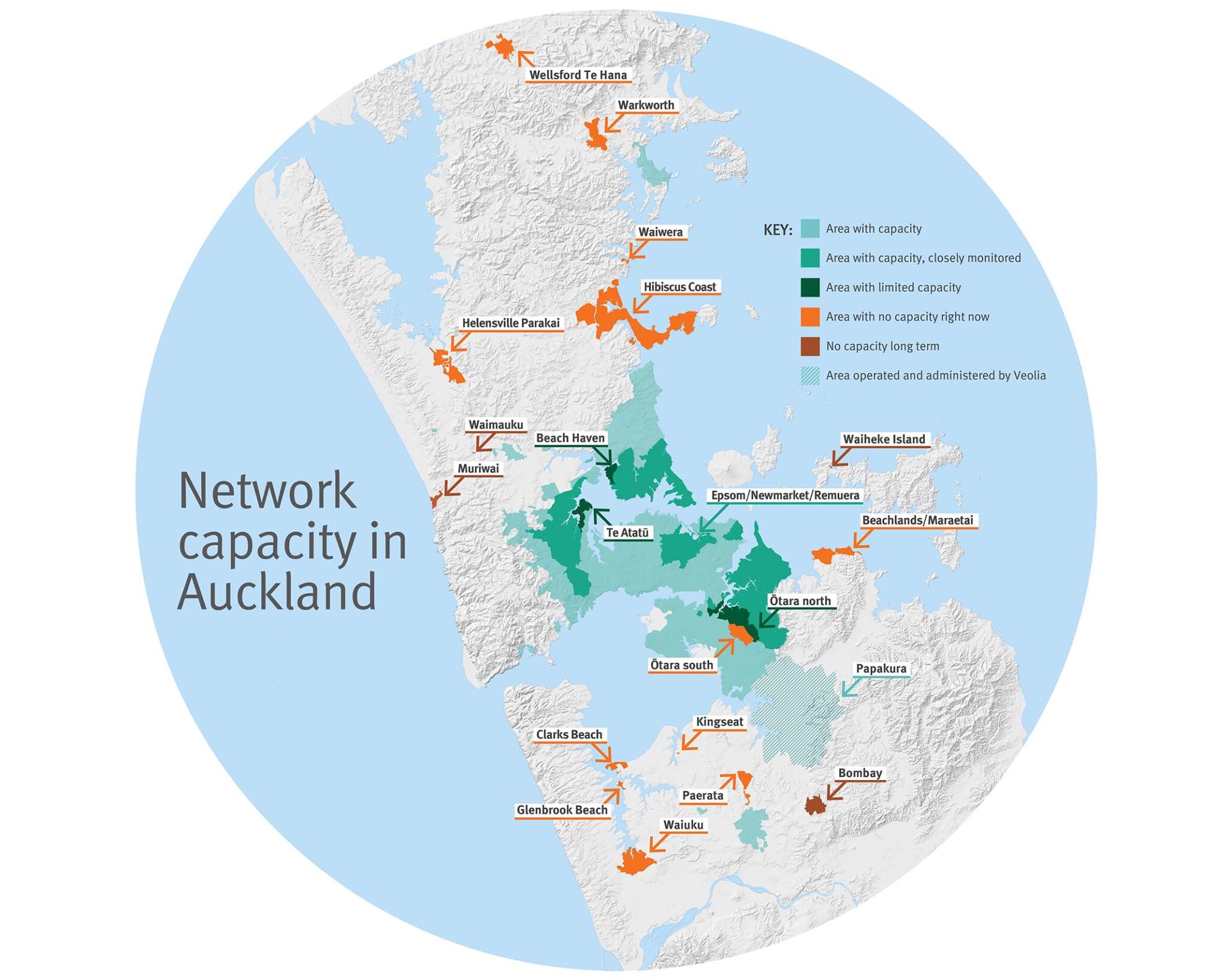
Watercare’s capacity information now clearly distinguishes between areas with available capacity, areas under monitoring, and areas where capacity is constrained. These classifications are not a simple yes or no. Instead, they act as an early signal of risk, cost, and timing.
In practical terms, they indicate whether a development is likely to connect easily, require staging or upgrades, or face delays while infrastructure is planned and delivered. For larger or more intensive developments, capacity constraints can directly affect yield assumptions, timing, and holding costs.
How capacity interacts with PC120
This issue becomes even more important when considered alongside Plan Change 120 (PC120).
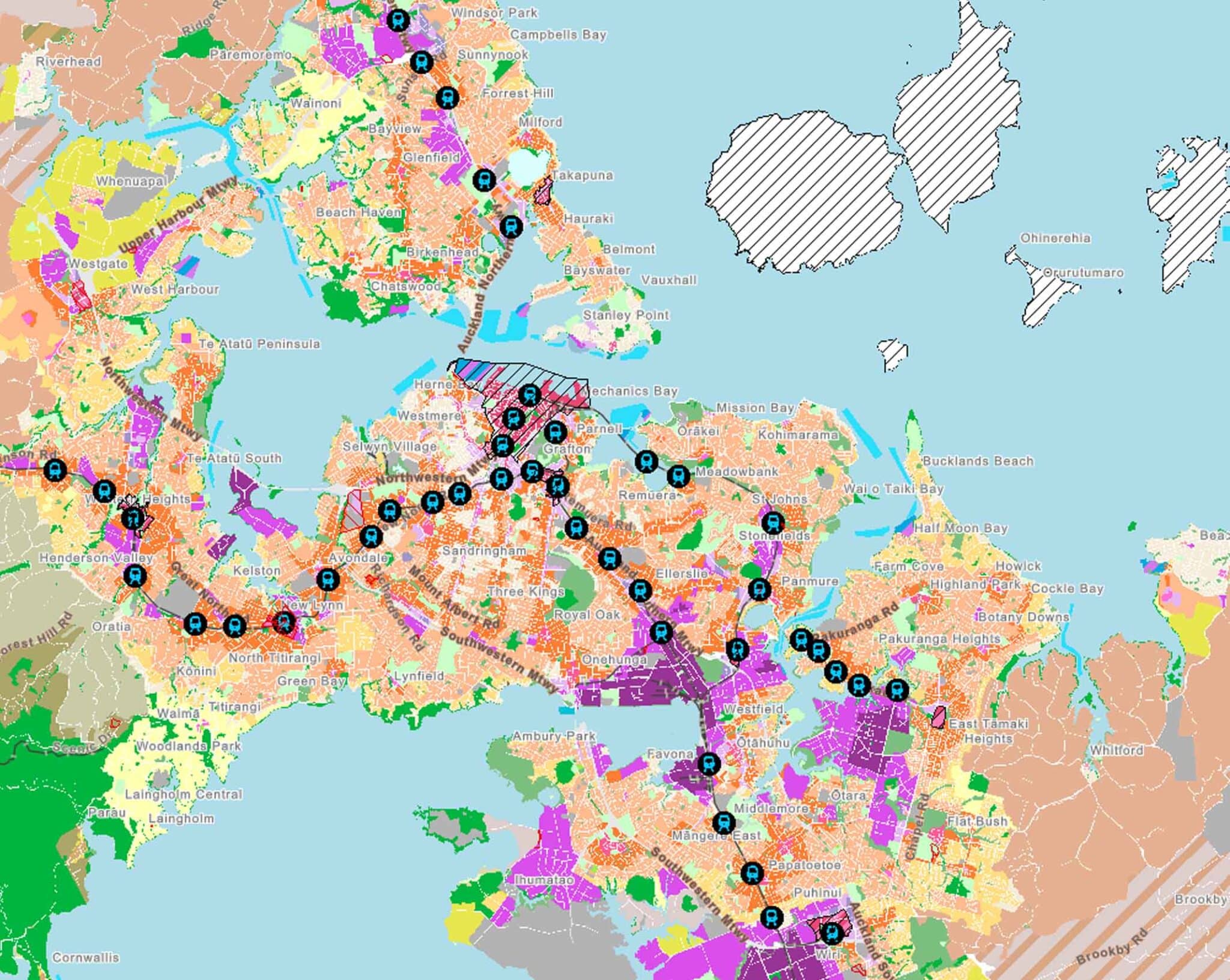
PC120 proposes to reshape Auckland’s growth pattern by directing more intensity into centres and urban areas close to rapid transit, while also tightening rules around natural hazards such as flooding and coastal risk. On paper, this increases development potential in well-located urban areas.
In practice, that potential is only realised where servicing capacity exists. Higher zoning under PC120 does not override infrastructure limits. In some locations, PC120 may increase demand for capacity in networks that are already constrained, making Watercare’s assessment a critical gatekeeper for whether intensified development can proceed as intended.
For landowners and developers, proposed zoning uplifts and servicing capacity need to be read together. A site that looks attractive under PC120 may still face delivery challenges if wastewater or water networks’ capacity are limited. Conversely, sites within or near PC120 intensification areas that already have confirmed capacity may carry greater certainty and lower infrastructure risk.
Why this matters for 2026 feasibility decisions
For those looking to get a new project underway in 2026, the key shift is to stop treating servicing as a late-stage check.
Watercare capacity should be reviewed early, alongside zoning, overlays, hazard constraints, and market demand. Capacity maps provide a useful starting point, but they are most effective when combined with site-specific assessment and an understanding of how planning changes interact with infrastructure availability.
In a market where feasibility margins are tighter, these constraints matter. Servicing limitations can influence development staging, consent pathways, and ultimately land value. Identifying them early allows more informed decisions, whether that means refining a concept, adjusting timing expectations, or understanding what upgrades or funding discussions may be required to unlock capacity.
Taking a more integrated view of development potential
As Auckland continues to grow and infrastructure investment remains under pressure, servicing certainty will remain one of the defining factors in development outcomes.
Revisiting Watercare’s capacity information now, with a clear understanding of PC120, helps landowners and developers move beyond theoretical potential and focus on practical delivery. Understanding how zoning and servicing align is no longer optional. It is a core part of assessing development potential in Auckland today.
How Cato Bolam can help clarify development potential
Understanding how Watercare capacity, planning changes, and site-specific constraints interact often requires more than a high-level map check.
Our team supports landowners and developers through flood review reports, servicing and infrastructure assessments, and early-stage development feasibility assessments. These services are designed to confirm where constraints exist, where they can be mitigated, and what that means for yield, staging, timing, and consent pathways.
In practice, areas facing servicing constraints often overlap with flood-prone catchments or older networks, which makes understanding hazard risk and infrastructure capacity together especially important.
For landowners and developers assessing opportunities in 2026, having the right technical input early can make the difference between a stalled project and one that moves forward with confidence.
Ready to confirm what’s possible for your site?
Whether you are exploring options, preparing to purchase land, or refining a development concept, early technical input can reduce risk, improve decision-making, and avoid costly surprises later.
Talk to our team about your site and how we can help you assess its development potential with confidence.