Three key factors shaping development in Auckland in 2026
Beyond zoning: what actually makes a site developable in 2026
A site can look promising on paper, but in 2026 the question is less about zoning and more about what can actually be developed, serviced, consented, and delivered.
In Auckland, development is increasingly shaped by a combination of planning provisions, infrastructure capacity, and natural hazard constraints. While Plan Change 120 (PC120) remains proposed, its natural hazard provisions have immediate legal effect, including rules relating to flooding, landslides, coastal erosion, and coastal inundation.
For landowners and developers, buildability is no longer defined by zoning alone. It comes down to how planning rules, servicing, and site-specific constraints align in practice. While this article focuses on Auckland’s urban suburbs, many of these factors apply more broadly across both urban and rural land.
Where things are lining up
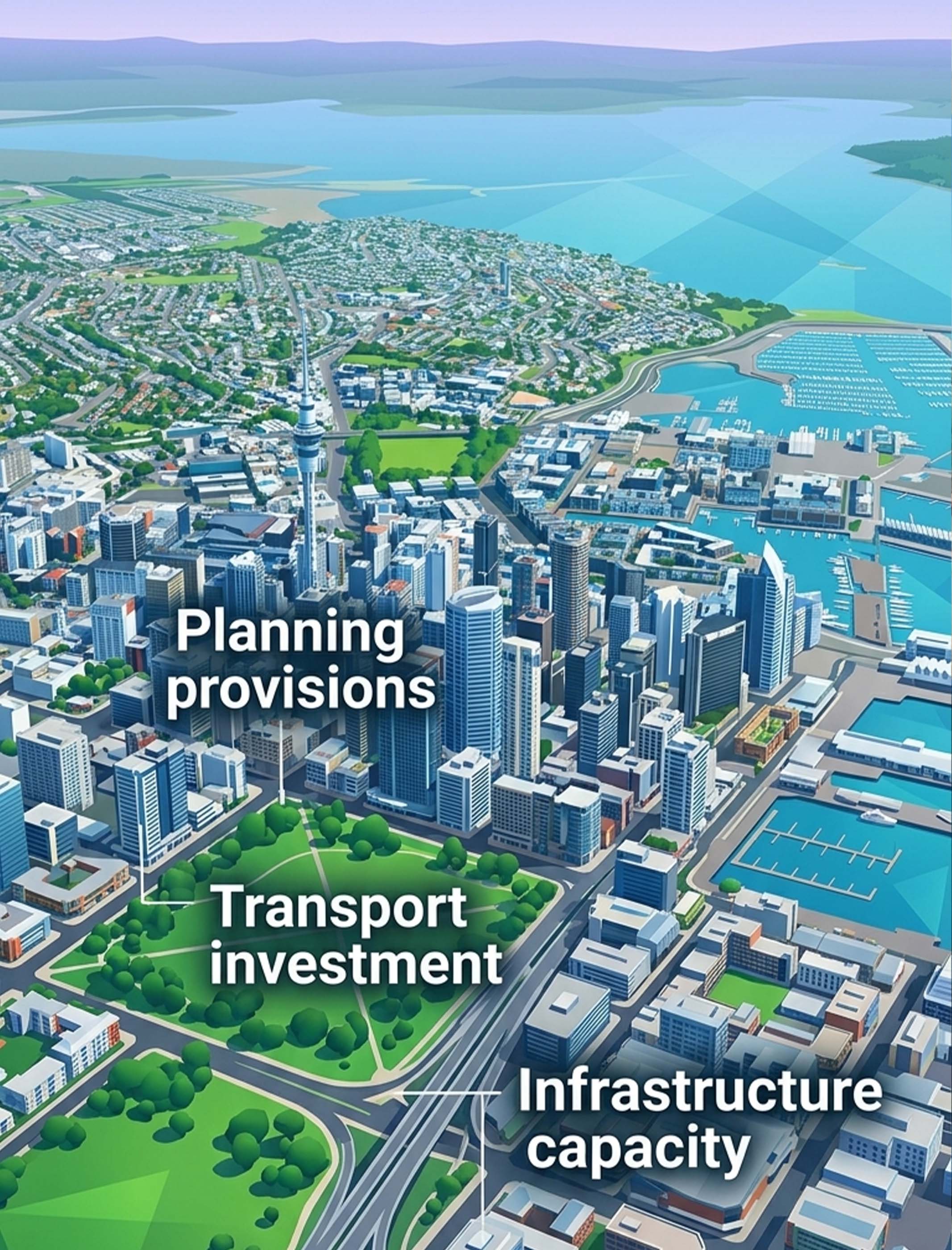
The opportunities in 2026 are generally where three elements are already aligned:
- planning provisions
- transport investment
- and infrastructure capacity, or committed upgrades
This is why development activity continues to track more strongly in:
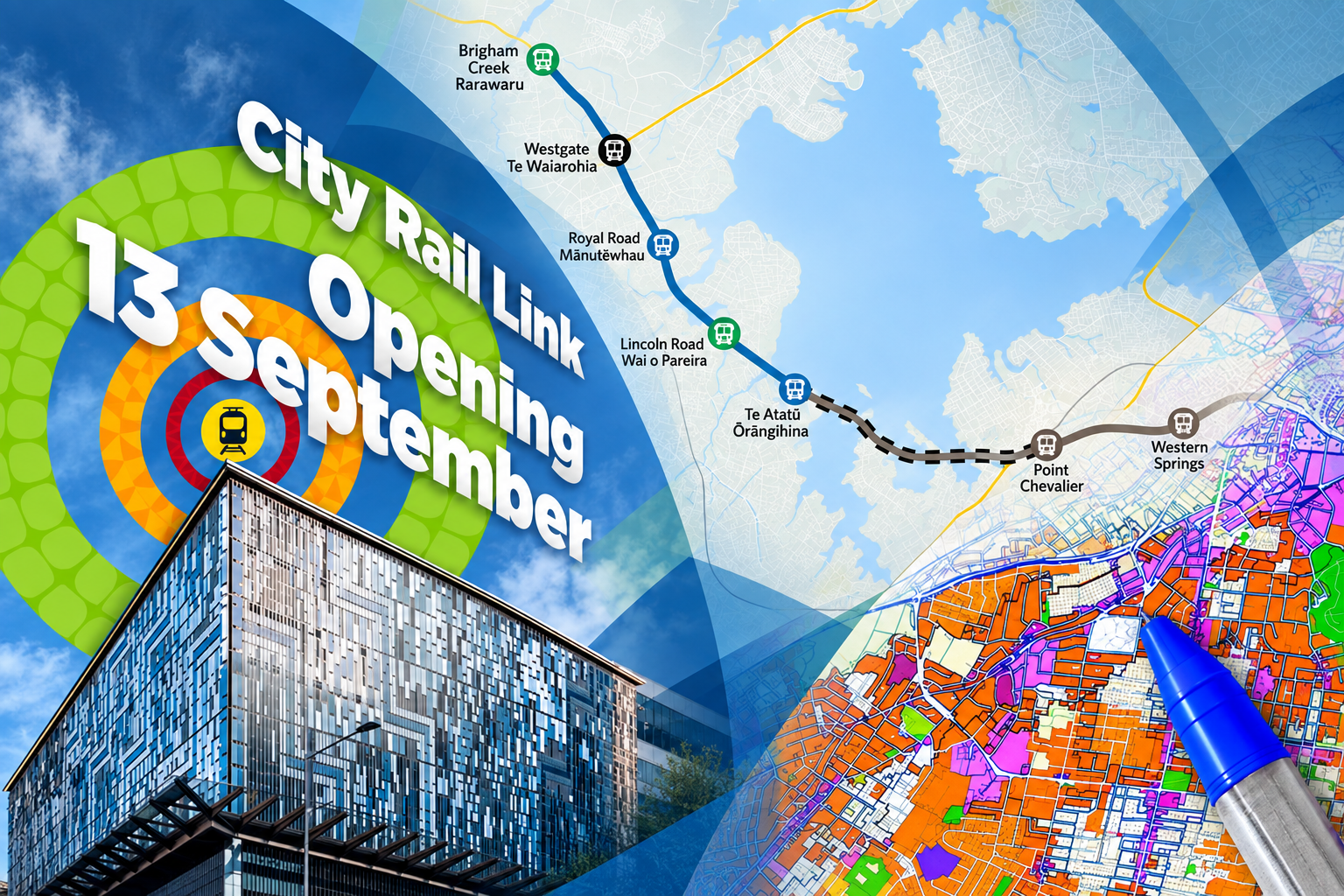
- The central city and CRL catchments, including Aotea / Te Waihorotiu, Karangahape, and Maungawhau / Mt Eden
- Established rail corridors and town centre catchments across the existing urban area
- Parts of Māngere East and Favona, supported by the Archboyd Pump Station
- Pukekohe, where wastewater investment is directly linked to enabling housing growth
- Established western and southern suburbs such as Mt Roskill and Mt Albert, where network upgrades are already underway
- Selected northern growth areas such as Warkworth, where staged wastewater upgrades are enabling development over time, noting that capacity and timing remain key constraints.
- Parts of the north-west, including Whenuapai, Redhills, Hobsonville and the Westgate/Massey North corridor, where wastewater investment and transport planning are being aligned to support growth.
These areas benefit from a clearer alignment between planning direction, infrastructure investment, and transport access. That does not remove complexity, but it does reduce uncertainty compared to locations where rezoning or redevelopment is ahead of servicing.
What needs checking early
In practice, three early checks are consistently making the biggest difference.
- Planning position
Look beyond zoning. Confirm how all operative overlays apply, including natural hazards and other constraints. PC120 is proposing upzoning or downzoning in some locations, so it is important to understand both the current framework and how it may change. These can directly affect density, layout, and the extent of buildable area and the scope of site-specific specialist assessments required.
- Servicing pathway
Watercare’s capacity maps provide a useful starting point, but they do not replace site-specific investigation. In some areas, development can proceed, but only with staging, conditions, or upgrades. Understanding how and when a site can connect is critical to avoiding redesign and delays later.
- Growth and transport context
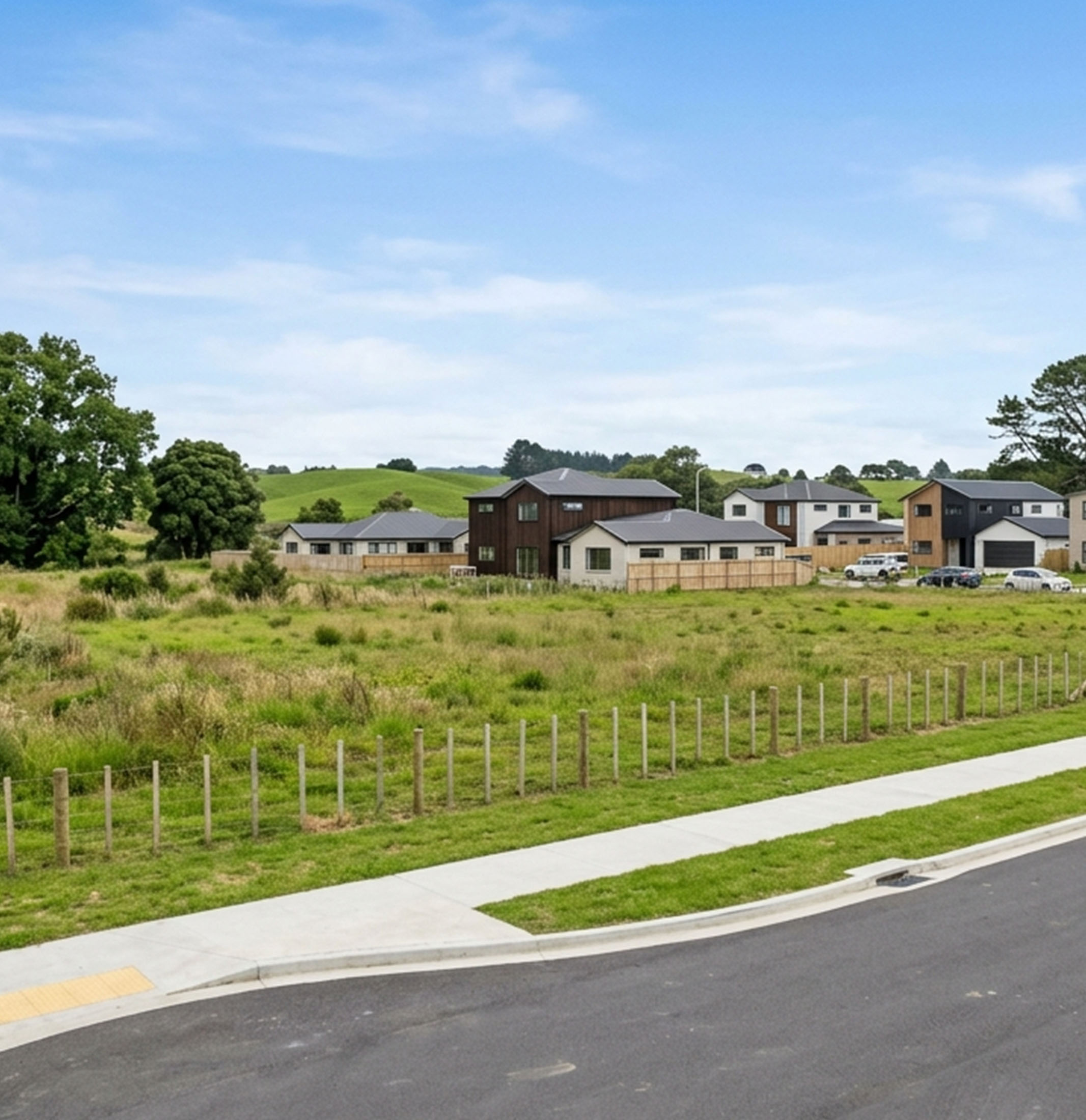
Auckland Transport’s Supporting Growth programme responds to the Future Development Strategy, which sets out when Future Urban Zoned land is expected to be released. In some cases, areas identified for growth may be further constrained by natural hazards, which can affect timing or zoning outcomes.
Feasibility must explore a range of scenarios
The current environment is still evolving. Plan Change 120 is not yet final, and future zoning outcomes remain subject to further submissions, hearings, and decisions.
At the same time, infrastructure constraints and hazard considerations are already influencing development outcomes.
This means early feasibility work is not about predicting a single outcome. It is about understanding the range of possible scenarios, identifying risks, and making informed decisions based on what is known today.
For landowners and developers, this reduces the likelihood of late-stage changes and supports a more deliberate approach to timing and investment.
Further submissions on Plan Change 120 are expected to open soon for submitters, providing another opportunity to shape outcomes. We’ll share updates as this process progresses.
How we can help
In 2026, feasibility is less about theoretical yield and more about whether a site can be delivered in practice.
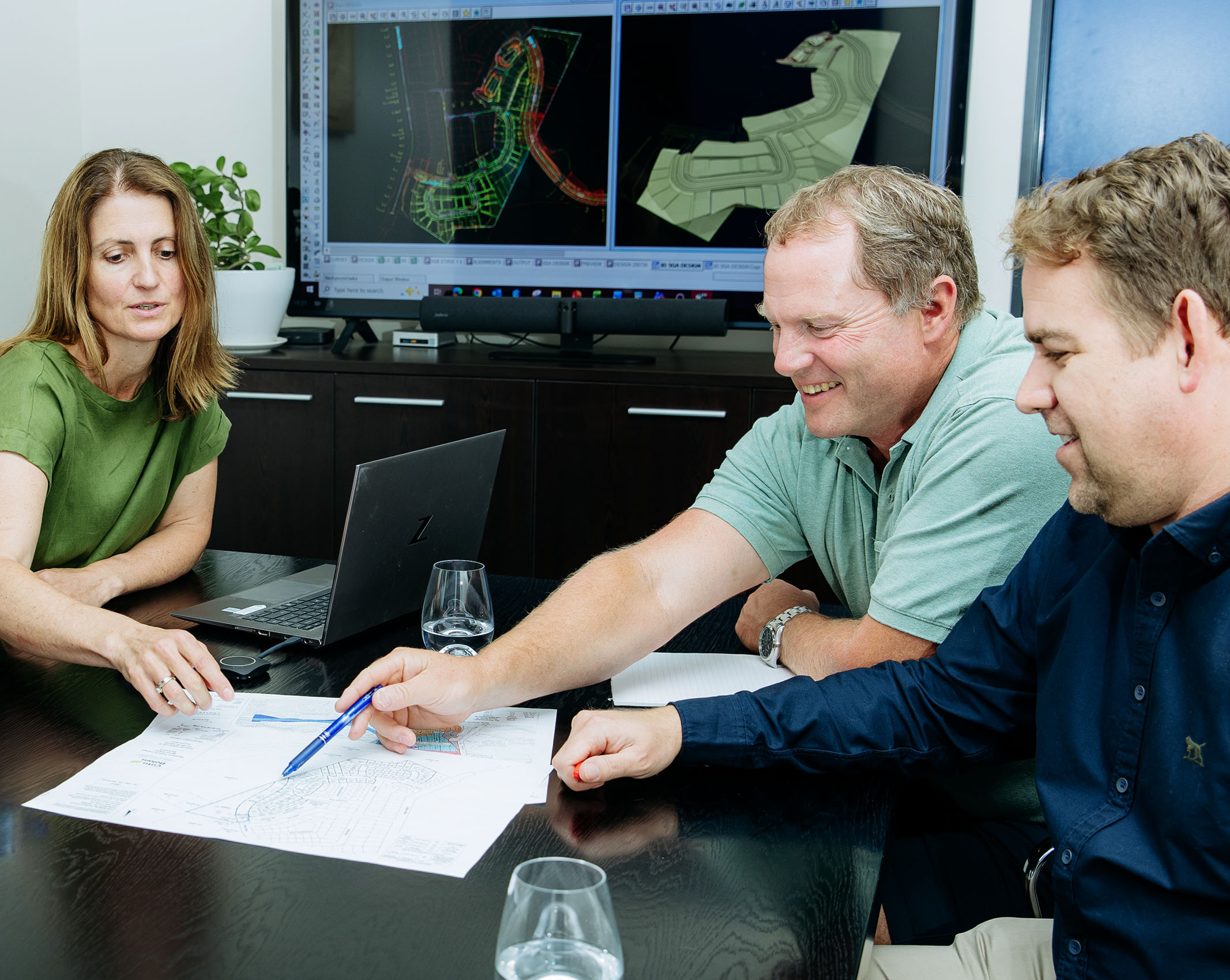
Cato Bolam’s planning team supports landowners and developers early in the process by:
- Testing what is realistically achievable
Assessing how planning provisions, all hazard rules, and site constraints interact to influence development potential - Clarifying servicing pathways
Identifying how and when a site can connect to infrastructure, and what that means for staging and delivery - Exploring practical development options
Bringing planning, engineering, and architectural design input together early to shape workable solutions - Reducing uncertainty and risk before decisions are made
Providing clear, evidence-based advice to support acquisition, design, and next steps
In the current environment, the difference between a project that progresses and one that stalls often comes down to how well these factors are understood early.
With the right input early, you can identify a clear path forward. If you have a site you’d like to explore, talk to the Cato Bolam team about its potential.