
Is your development site affected by Auckland’s new natural hazard rules?
Many property owners and smaller-scale developers are discovering that the Plan Change 120 (PC120) natural hazard overlays are now influencing development potential, resource consent requirements, project costs, and approval pathways.
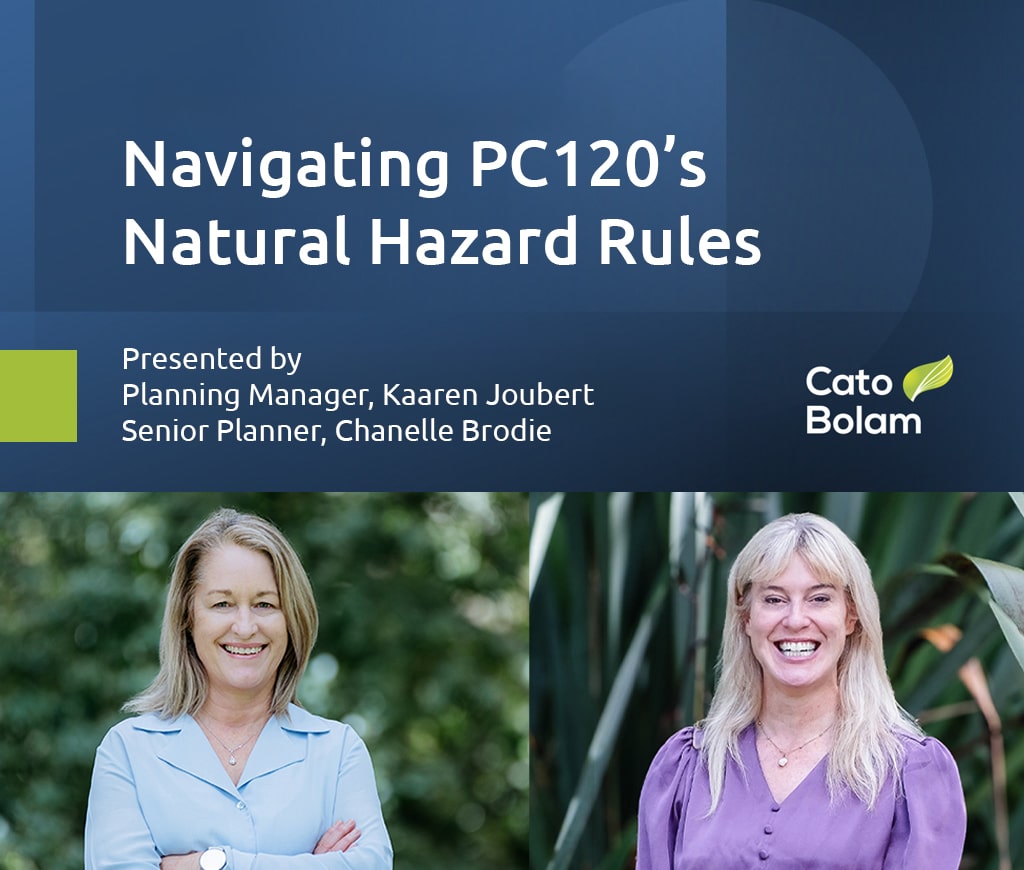
To help make sense of these changes, Cato Bolam’s Planning Manager, Kaaren Joubert, and Senior Planner, Chanelle Brodie, have recorded a free webinar that breaks down what PC120 means in practical terms and how the new rules are being applied on the ground.
What you’ll learn
In this practical discussion, Kaaren and Chanelle cover:
- What Auckland Council considers a natural hazard
- The natural hazards addressed by PC120, including flooding, coastal hazards, landslide risk, and wildfire susceptibility
- When natural hazard provisions can trigger a resource consent requirement
- How to identify whether your property is affected using Auckland Council’s mapping tools
- The types of development activities most commonly impacted
- What information and specialist reports may be required to support an application
- How natural hazard considerations are influencing resource consent approval pathways
The webinar focuses on the real-world implications for Auckland landowners and developers, helping you understand where risks may arise and what steps can be taken early in the planning process.
Get the webinar link!
Fill in the form below and the recording will be sent directly to your inbox.
Why this matters
Natural hazard overlays now affect a large number of Auckland properties. In many cases, development proposals that may previously have been straightforward can now require additional assessment, specialist input, or resource consent.
Early planning advice is becoming increasingly important. Understanding potential constraints before purchasing a property, designing a development, or lodging a consent application can help avoid delays, reduce costs, and provide greater certainty.
As discussed in the webinar, approval outcomes often depend on site-specific conditions, the type of development proposed, and whether any identified risks can be appropriately managed.
Talk to our team
We’re here to help you understand what the new PC120 natural hazard rules mean for your property or development site. Our planners can assess your site, outline risks and opportunities, and provide expert planning advice. If you’d like site-specific advice, get in touch with our planning team to discuss your property or development proposal.
FAQs
Is your Auckland development site affected by PC120's Natural Hazard Rules?
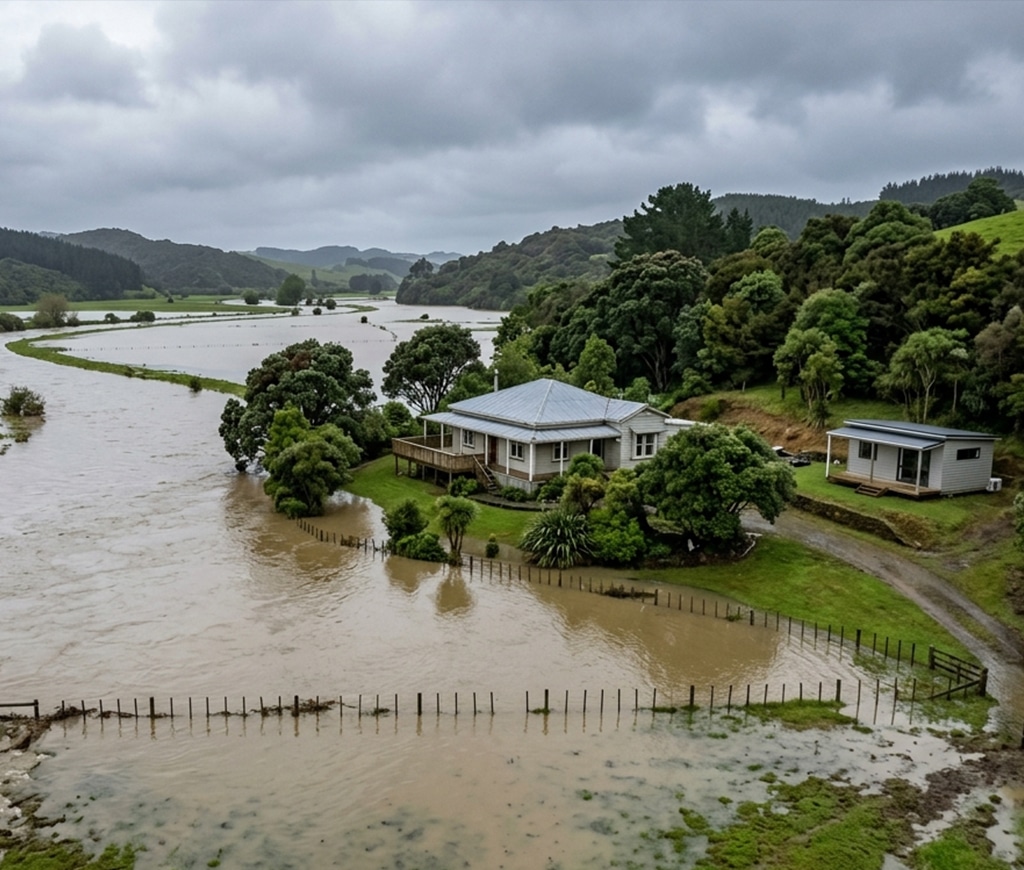
There’s a high chance it is. Auckland Council’s natural hazard mapping now covers a significant number of properties across the region, identifying areas potentially affected by flooding hazards, overland flow paths, coastal hazards, landslide susceptibility, and other natural hazards.
Even if a property has not experienced a natural hazard event, it may still be subject to a natural hazard overlay. Understanding whether these overlays apply to your site is an important first step before purchasing, designing, or developing a property.
Why do natural hazard overlays matter before purchasing a site?
Natural hazard overlays and mapped hazard areas can influence development potential, consent requirements, project costs, and timelines. Depending on the type of hazard identified, additional investigations, specialist assessments, or risk assessments may be required before development can proceed.
Identifying any natural hazard constraints before purchasing can help you make more informed decisions, understand potential development requirements, and avoid unexpected challenges later in the project.
When are specialist reports likely to be required?
Specialist reports are often required where a site is affected by a natural hazard overlay or mapped landslide susceptibility area. Depending on the hazard identified and the proposed development, this may include flood, coastal, geotechnical, or natural hazard risk assessments to support a resource consent application.
The purpose of these assessments is to better understand site-specific conditions and demonstrate that natural hazard risks can be appropriately managed.
How can I check if my property is affected by a natural hazard overlay?
Auckland Council’s GeoMaps and PC120 mapping tools can help identify whether a property is affected by flooding hazards, coastal hazards, landslide susceptibility areas, or other natural hazard overlays. A planner can then help interpret the mapping and assess what it may mean for your development plans, including whether any additional assessments or consents may be required.