Granny flats: the new rules are here — what’s actually changed
We previously shared an update outlining proposed changes to granny flat rules and what was expected to come into force. As of 15 January 2026, two new changes are now live.
While the intent of the new framework is to make it easier to build a granny flat, now formally referred to as a Detached Minor Residential Unit (DMRU), the reality is more nuanced. There are now two separate but related pathways, each with its own criteria, and neither removes the need for careful planning and assessment.
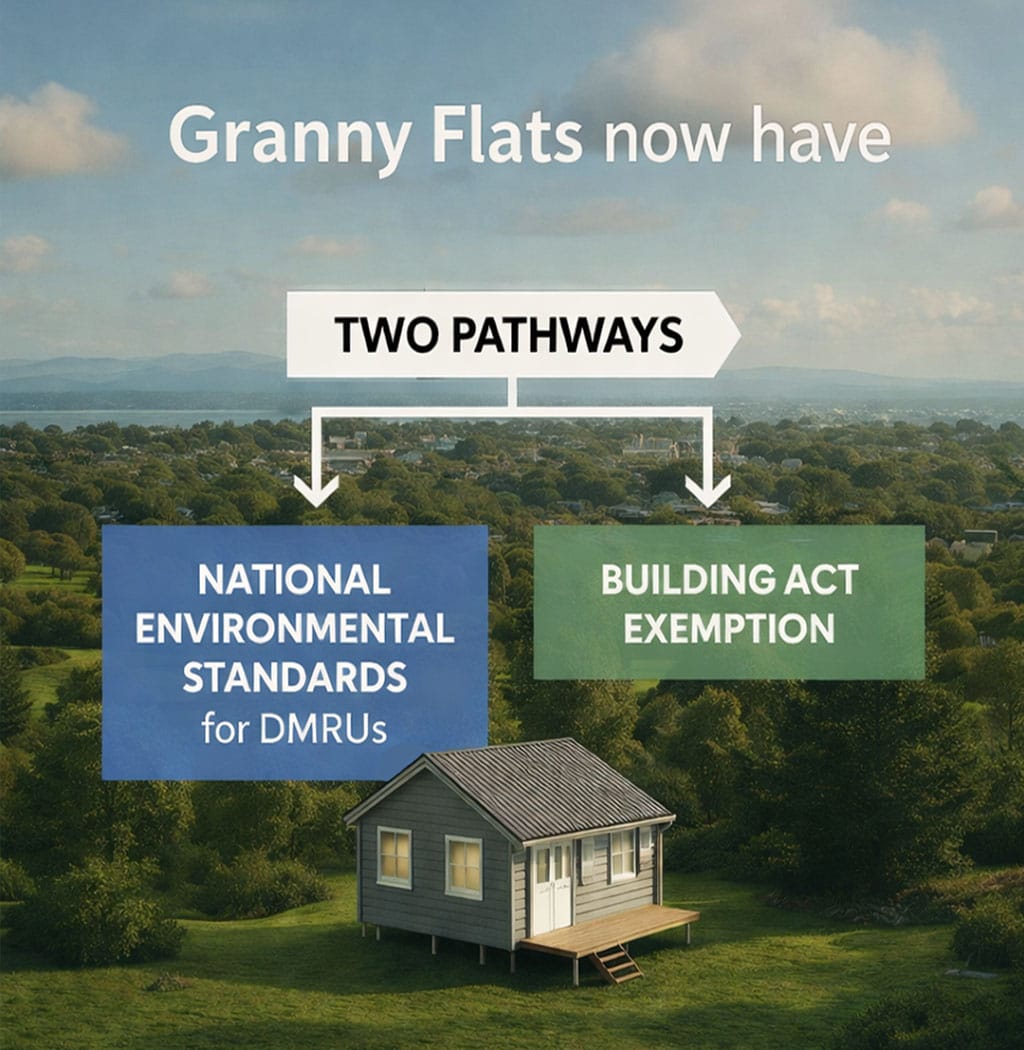
Two pathways, not one
From today, granny flats are governed by:
- planning rules under the National Environmental Standards for DMRUs (NES-DMRU), and
- a Building Act exemption that may remove the need for a building consent.
They sound similar, but they are not the same. Each pathway has specific conditions, and both need to be considered together when assessing a proposal.
1. Planning rules (NES for DMRUs)
Under the new NES-DMRU, a granny flat can be a permitted activity under the Resource Management Act, but only if it meets all of the NES standards.
These standards include:
- a maximum size of 70 m²,
- limits on site coverage,
- minimum setbacks from boundaries and from the main dwelling, and
- different setback requirements depending on whether the site is urban or rural.
If all applicable standards are met, the activity may be permitted under the district plan. However, this does not mean planning rules no longer apply. Compliance still needs to be assessed, and if any standard is not met, the NES pathway falls away and the proposal must be assessed under the relevant district plan rules, which may require a resource consent.
It is also important to note that some planning controls apply regardless of the NES. These include subdivision rules, earthworks provisions, infrastructure requirements, natural hazards e.g. flooding or land instability planning controls and the protection of natural or cultural sites. All relevant regional plan rules continue to apply in every case.
Councils can also retain or introduce more permissive rules in their district plans. However, relying on more generous local rules does not automatically mean the Building Act exemption will apply.
2. Building Act exemption
Separately, the Building Act exemption may remove the need for a building consent, but again, only where strict conditions are met.
To qualify, the granny flat must:
- be new build only, not a conversion of an existing structure,
- be detached, single storey, and self-contained,
- be no more than 70 m², including any garage,
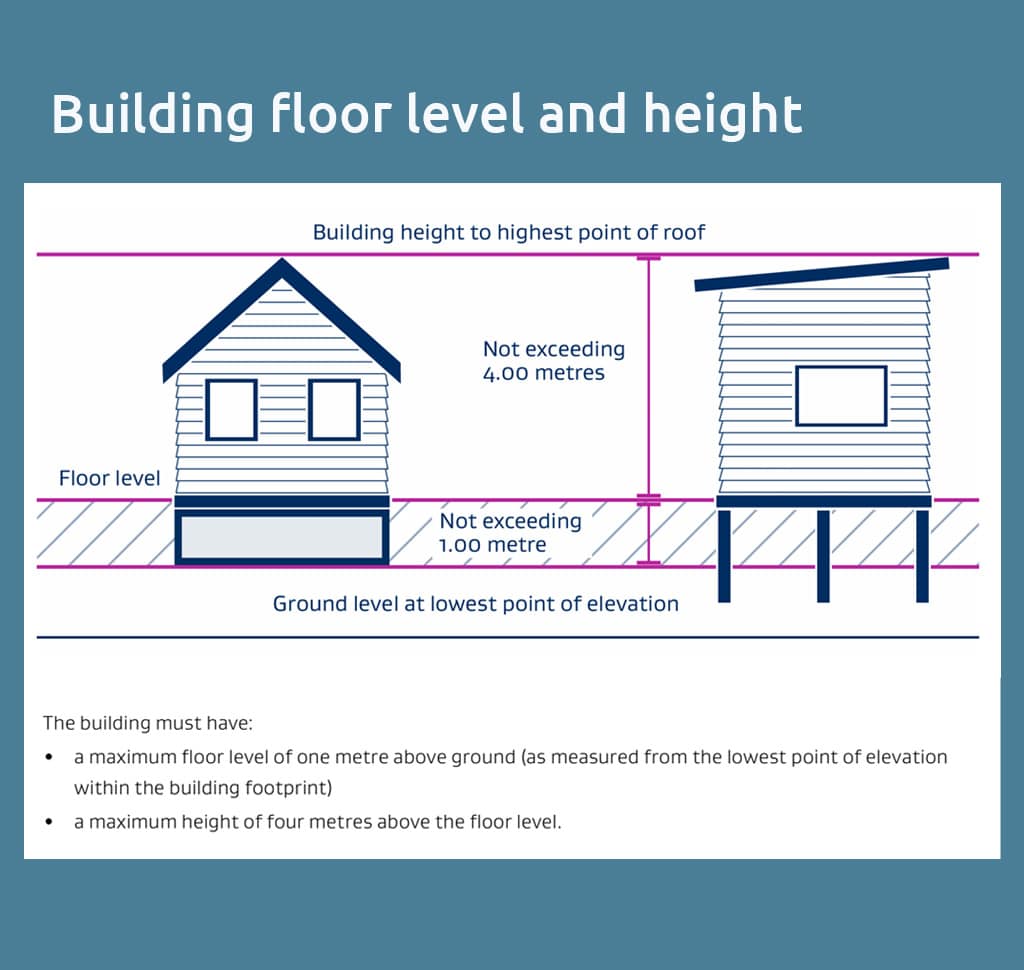
- meet prescribed height and floor-level limits,
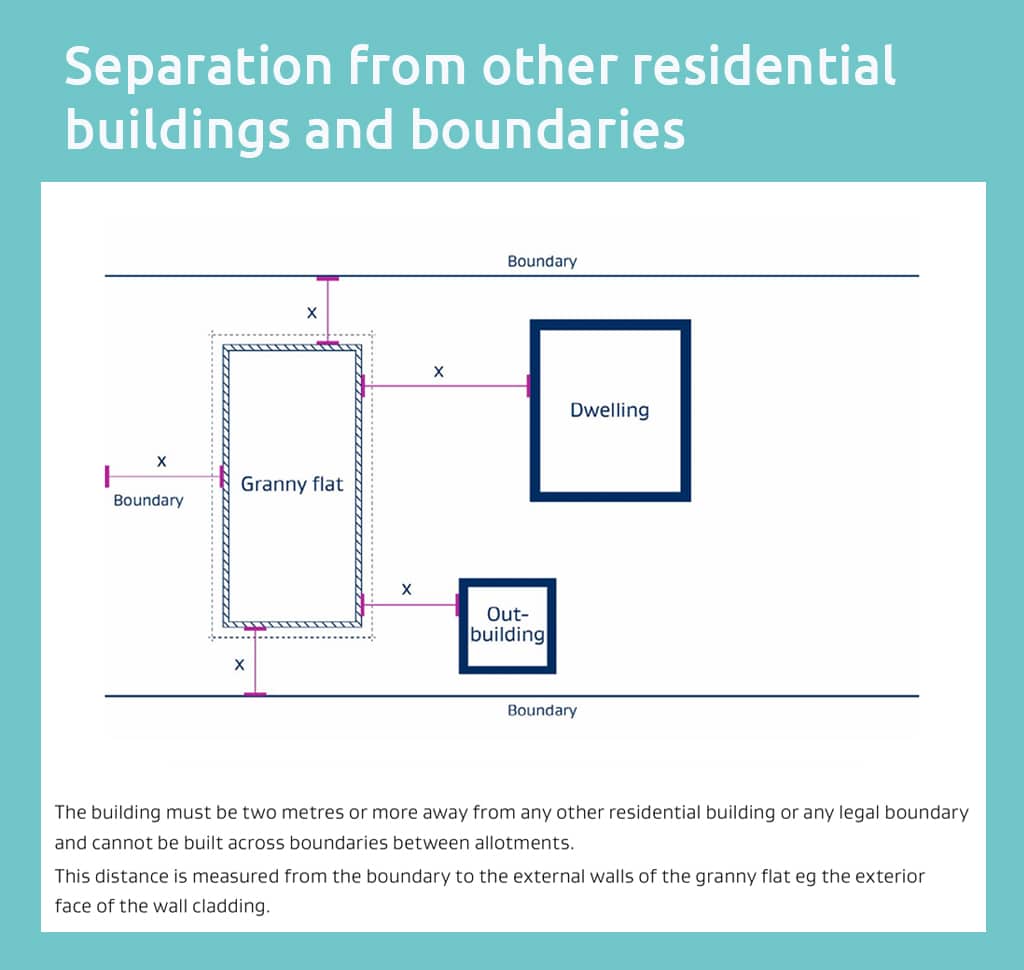
- be set back at least 2 metres from boundaries and other dwellings,
- be located on a site without unmitigated natural hazards, and
- comply with planning rules, including the NES-DMRU or relevant district plan provisions.
Even where the exemption applies:
- the design must be completed by a Licensed Building Practitioner (LBP), registered architect, or CPEng engineer,
- construction must be carried out by licensed building professionals, and
- a Project Information Memorandum (PIM) must still be obtained from council before work starts.
Not all small buildings qualify. Sleepouts, sheds, tiny homes on wheels, buildings over 70 m², and existing structures do not fall under this exemption.
What does not changeThe requirements for the following are not exempt:
- network utility connections,
- vehicle crossings,
- development contributions.
Bottom lineGranny flats are easier to build from 15 January 2026, but only if very specific planning and building criteria are met. You still need to check both the NES rules and the Building Act exemption separately, and council involvement does not disappear.
What you should do now
If you’re seriously considering a granny flat in 2026, the new rules make early feasibility checks more important, not less.
- Get planning and feasibility advice early.
Whether a granny flat can proceed as a permitted activity depends on precise site factors such as boundary setbacks, overlays, servicing constraints, and whether the site meets NES standards. Small details can change the pathway entirely. - Confirm the planning position before design is locked in.
The NES and district plan rules still need to be checked carefully. Assuming a proposal is permitted, only to find later that it is not, can result in redesigns, delays, or unexpected consenting costs. - Secure a PIM before any building work starts.
Even where a building consent is not required, a Project Information Memorandum is still mandatory. This step brings council into the process early and helps confirm infrastructure, hazards, and other site constraints. - Work with experienced professionals who understand both pathways.
Demonstrating compliance with the Building Code and the NES-DMRU requires coordination between planners, designers, and Licensed Building Practitioners. Getting this right upfront reduces risk later.
The new framework does create opportunities, but it rewards projects that are well planned, site-appropriate, and professionally scoped from the outset.

We’re here to help
If you’re weighing up whether a granny flat is viable on your site, our team can help you assess the planning and building pathways early, so you can move forward with clarity and confidence.
For more information, review MBIE’s latest guidance here: Granny Flats Exemption Guidance